Physician Wellness for Healthcare Institutions & Teams
“Dr. Mahoney brings the complete package to any wellness event. She is a dynamic leader, innovative teacher, engaging facilitator, and inspirational speaker whom I hold in the highest regard.”
— Dr. John Chuck, Chief of Regional Physician Wellness, The Permanente Medical Group
Physician wellness programming only works when it's done right.
I spent 20 years leading wellness within a major health system and the last 6 years building programs independently for organizations across the country.
That combination has taught me what actually works — and what doesn't.
Even well-resourced, well-intentioned programs often miss the mark.
A talk that feels performative confirms physicians' worst suspicions. A retreat without clinical credibility erodes trust. Coaching led by someone without sufficient training in physician culture — including well-meaning peer coaching programs that lack depth — can leave people more guarded than before.
The difference is in who's leading it and how it's built.
Everything I offer is grounded in decades of experience, evidence-based design, and clinical credibility that physicians notice. I've sat where your wellness directors sit.
I know what it takes to get skeptical physicians to actually engage — and to come back asking for more.
“Powerful, inspirational, and transformative!!! Jessie Mahoney is nothing but phenomenal, wise, bright, and fun.”
- ICU, Cleveland Clinic
Join these organizations in partnering with me:





Organizations include Stanford Medicine, Sutter Health (including Palo Alto Medical Foundation, Sutter Lakeside, and Sutter East Bay Medical Group), UCSF, the American College of Cardiology, ACOG, The Permanente Medical Group/Kaiser Permanente, the Medical University of South Carolina, Jefferson Healthcare, Providence Health, Santa Clara Valley Medical Center, Dignity Health, Tufts, El Camino Health, the University of New Mexico, and others.
Four ways I work with institutions.
-
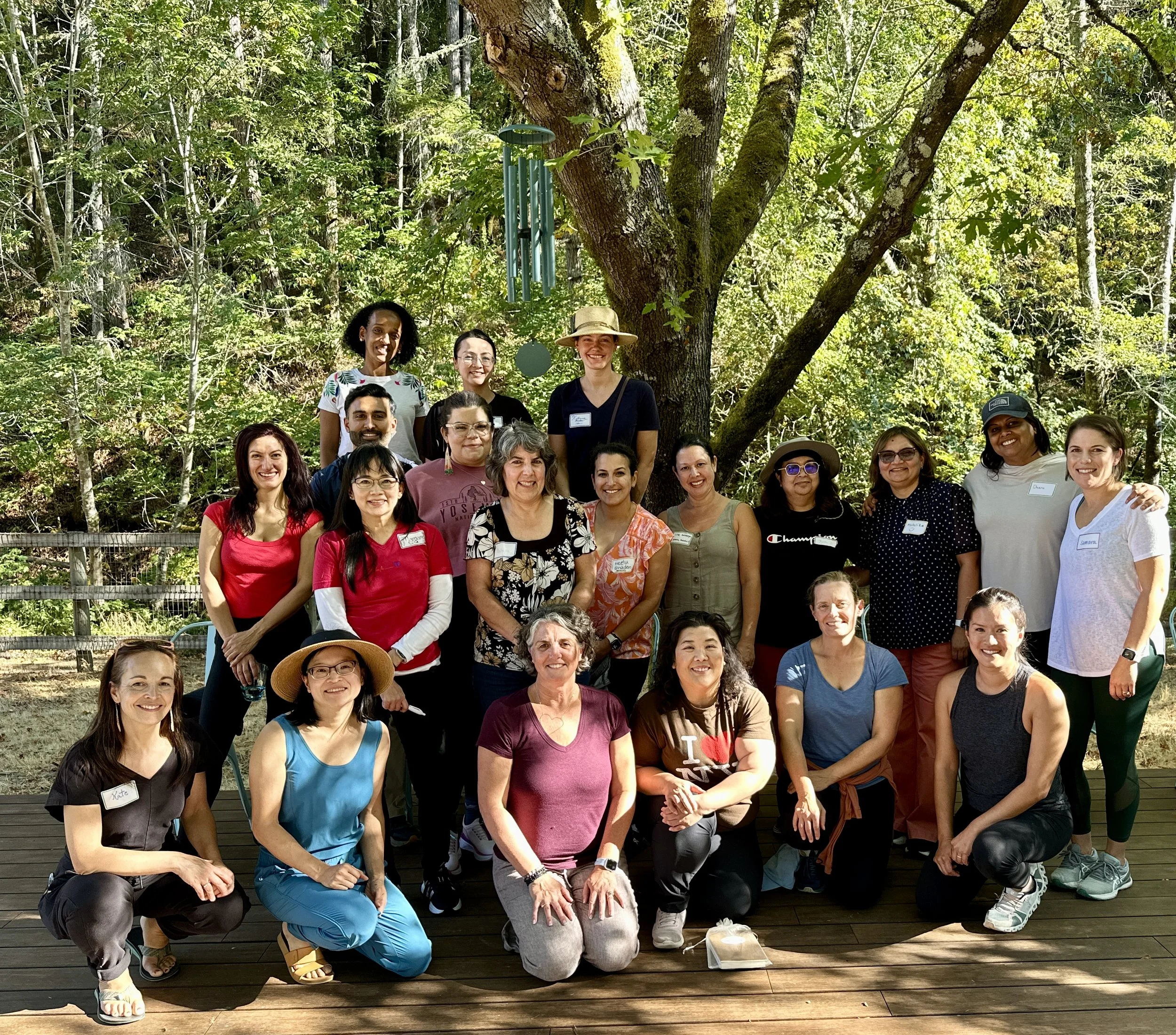
Immersive Clinician Wellness Retreats
Full-day, in-person experiences that combine coaching, mindfulness, nervous system science, nature, and farm-to-table meals. Deep trust, embodied change, and collegial connection that can’t be replicated on Zoom.Held at Nicasio Creek Farm in West Marin or at your location.
“Words cannot express how profoundly your retreat changed so many things in my life and in the life of my partners.”— Dr. Elizabeth Arias, PAFMG Hospitalist
-
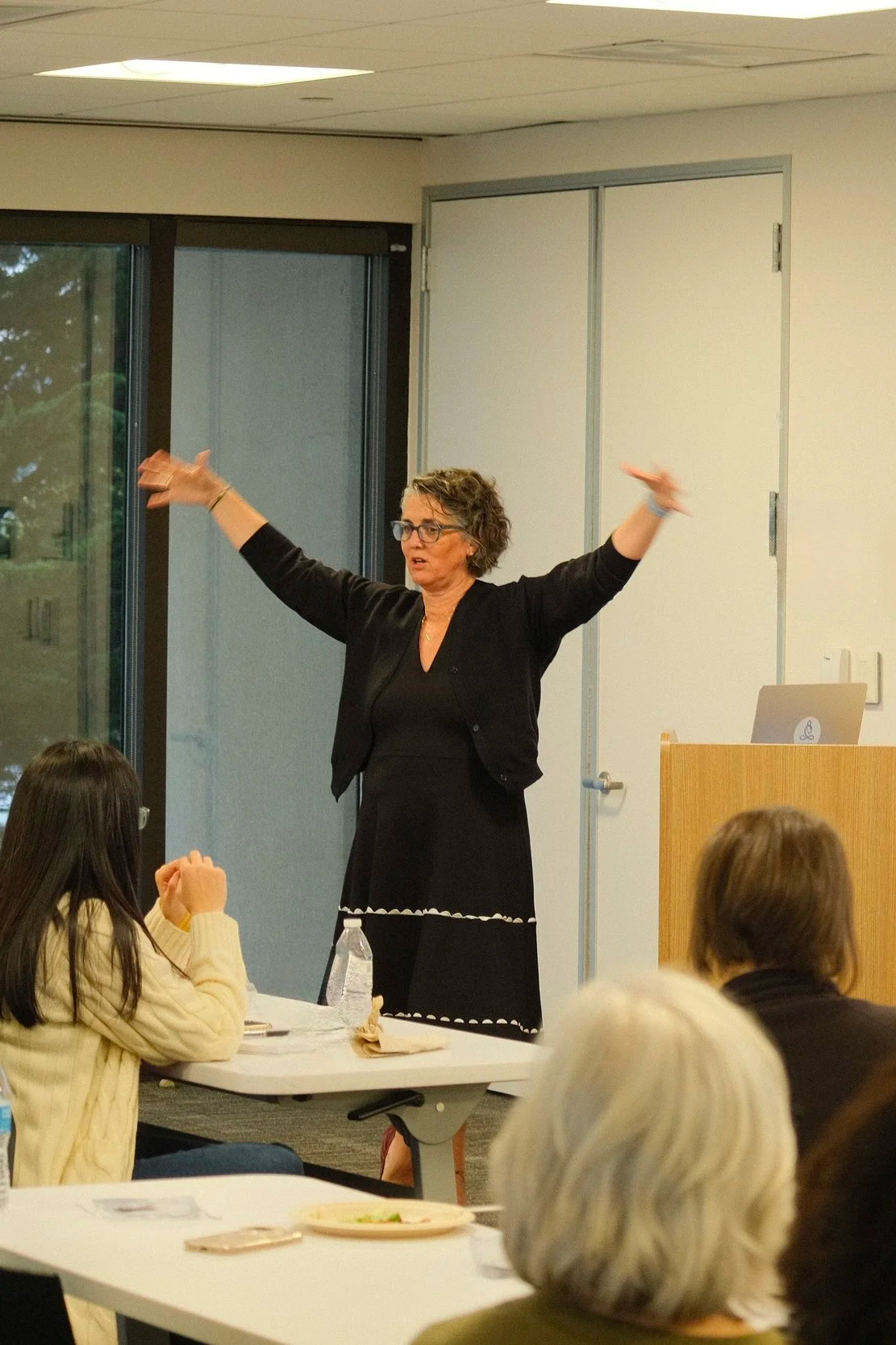
Keynote Talks and Workshops
For conferences, grand rounds, wellness summits, leadership forums, women in medicine events, and departmental retreats. Perspective-shifting talks that meet physicians where they are — acknowledging the real pressures of the system while offering tools to relate to them differently.
“I continue to hear nothing but rave reviews about your talk.”— Dr. Tricia James, Providence
-
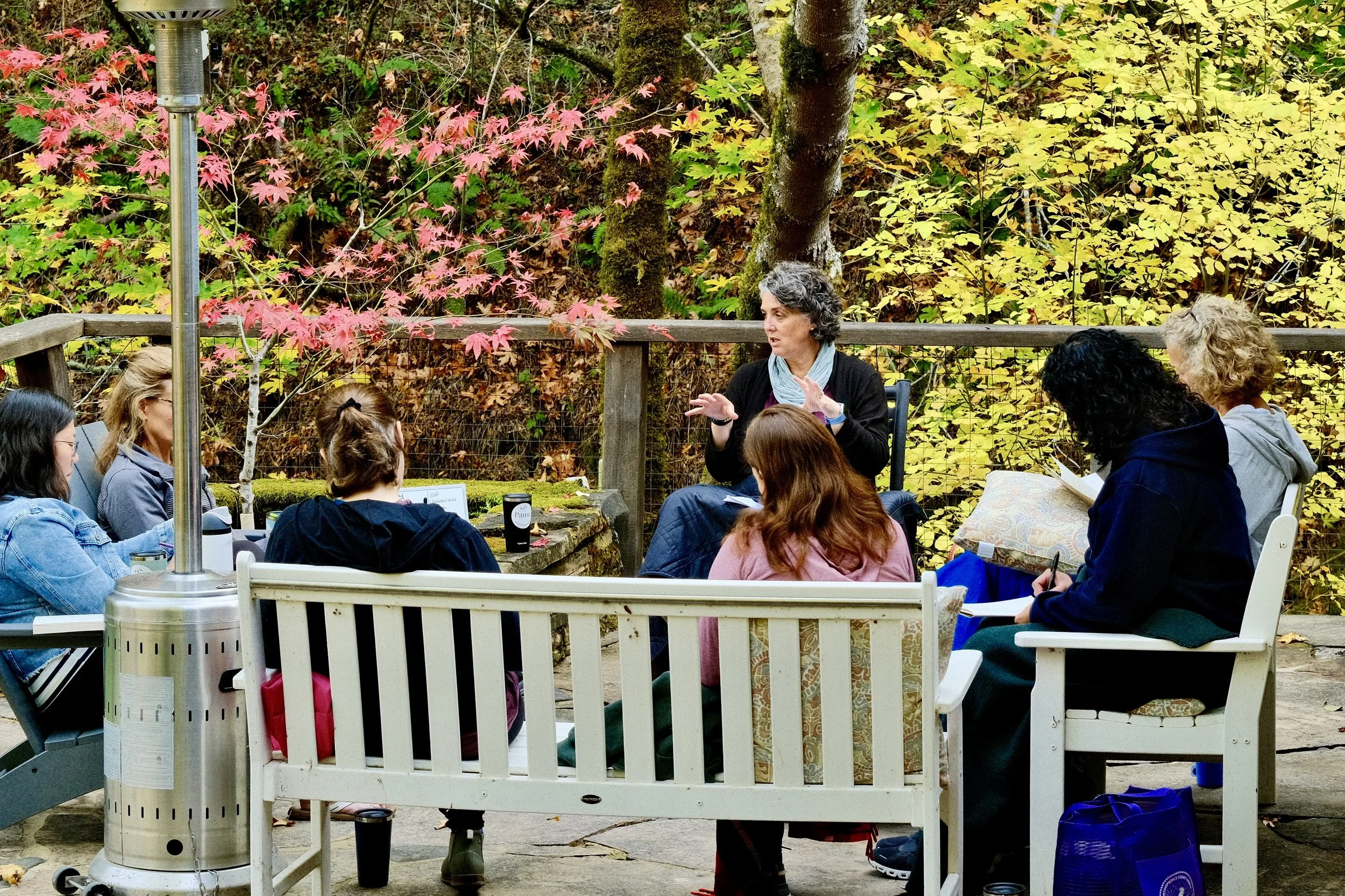
Virtual Coaching & GME Programs
Virtual coaching programs, GME coaching for fellows and residents, sponsored 1:1 coaching, and leadership development. I offer sustained, skills-based interventions that build over multiple sessions and create lasting change in burnout, engagement, and professional fulfillment.
“I may have left a job I love if it weren’t for physician coaching and development work with Dr. Mahoney.”— Dr. Samara Nebendzahl, Sutter East Bay Medical Director & Wellness Lead
-
Wellness Strategy & Program Consulting
For Chief Wellness Officers, CMOs, and wellness committees, building or rebuilding their physician wellness programming.
I help you design what works, avoid what doesn't, and build something that actually works.
"Working with Jessie helped us design a wellness program that our physicians actually engaged with. Her experience and her honest feedback are rare and invaluable."
Physician Well-Being Is A Strategic Priority
Unwell physicians and clinicians are a patient safety problem, a quality problem, a retention problem, and a financial problem. Burned-out physicians make more medical errors, have lower patient satisfaction scores, and are more likely to leave. They contribute to higher malpractice risk, worse care quality metrics, and a culture that makes it harder to recruit.
Institutions that prioritize wellness strategically see returns across every domain.
Patient experience — Physicians who feel supported deliver more compassionate, attentive care
Quality and safety — Burnout correlates with increased errors and lower adherence to care standards
Retention — Replacing a single physician costs $500,000 to $1 million
Recruitment and reputation — Institutions known for investing in physicians attract stronger candidates
Leadership and culture — Physicians with self-awareness and communication skills become better leaders, colleagues, and mentors
Case Study: Sutter Health East Bay
In 2024–2026, I facilitated six physician wellness retreats for Sutter Health East Bay Medical Group. These were Sutter’s first-ever physician wellness offerings of any kind.
96/96 physicians found it valuable. 86/96 would recommend it to their colleagues.
The program has proved so impactful that Sutter has expanded it. In 2026, it will also include virtual coaching cohorts and in-person leadership programming.
-
“Every provider within 6 months of starting should be offered this.” — Executive Director, Primary Care, Sutter
-
“This has given me the tools to prevent burnout, feel better, and in turn provide better care to patients.” — Internal Medicine Physician, Sutter
Case Study: Stanford Medicine GME Fellow Coaching Program
I have been leading a successful longitudinal coaching program for Stanford Anesthesia Fellows since 2020. It is an opt-in virtual coaching program that includes both small-group and 1:1 sessions. Over 100 fellows have participated. 100% have found it helpful. 100% would recommend it to their colleagues.
Stanford Fellow Feedback
-
“This program helped me a ton! I was on the verge of dropping out of the fellowship and the coaching really helped me get my perspective back.”
-
“Coaching validated my struggles associated with training. I learned which of my coping strategies were healthy, and which to abandon. I came away with new ideas of things to try, many of which have useful applications outside medical training.”
-
“Coaching helped me take ownership of my fellowship experience and direct my energies toward things will benefit me as a physician in the long term.”
-
“The coaching program showed me that the fellowship cares about my professional development and wellness.”
Wellness Strategy & Program Design
Someone who has actually led wellness from both the inside and the outside for over two decades is rare. Someone experienced who can tell you honestly what will help and what won’t saves time and money.
I bring a rare combination — twenty years leading wellness within a major medical group, six years building independent programs for institutions across the country, and three coach-training certifications. I know what works and what doesn’t.
I help Chief Wellness Officers, CMOs, GME leaders, and wellness committees:
Design new physician wellness programs
Improve existing programs that aren't getting traction
Advise on culture work that supports wellness programming
Build the business case and support grant writing
Design measurement frameworks that capture what actually matters — intention to leave, engagement, collegiality, feeling valued.
I offer single strategy sessions, program development, and multi-month advisory support.
Who do I collaborate with to bring wellness to organizations
Chief Wellness Officers & Wellness Directors seeking programming that actually moves the needle
Chief Medical Officers & VPs of Medical Affairs who want to invest in retention, engagement, and workforce sustainability
GME Program Directors and Support Staff who support trainee well-being
Department Chiefs & Division Leads who want to build healthier team cultures
Conference Organizers & Wellness Committees who are looking for an impactful keynote or workshop
Women in Medicine Program Leaders who want to create a meaningful event
Mentorship Program Directors looking to integrate coaching and mindfulness into mentorship structures
Individual Physicians who want to bring it to their institutions
I share strategies for bringing this work to your institution in these articles and related podcasts.
Leadership Feedback
-
“Don’t underestimate the potential positive practical impact of this experience on improving all aspects of your team’s life. I encourage all physicians and all teams to invest in this.”
— Chair, Department of Medicine, Santa Clara Valley Medical Center
-
“Thank you for your incredible dedication to wellness and helping our doctors find meaning and purpose in their work.”
— Maria Ansari, MD, FACC, CEO and Executive Director, The Permanente Medical Group
-
“Jessie has a gift and I am so grateful she chose to share it. It is my mission to help my colleagues who are struggling, like I was before I came to her retreats, by spreading the word about her work everywhere I can. ”
— Dr. Shilpa Marwaha, Chief Infectious Disease, TPMG
-
“Jessie is truly a deep, wise, curious, brilliant teacher. “
- Assistant Physician in Chief , TPMG
Why Both Physicians and Institutions Trust This Work
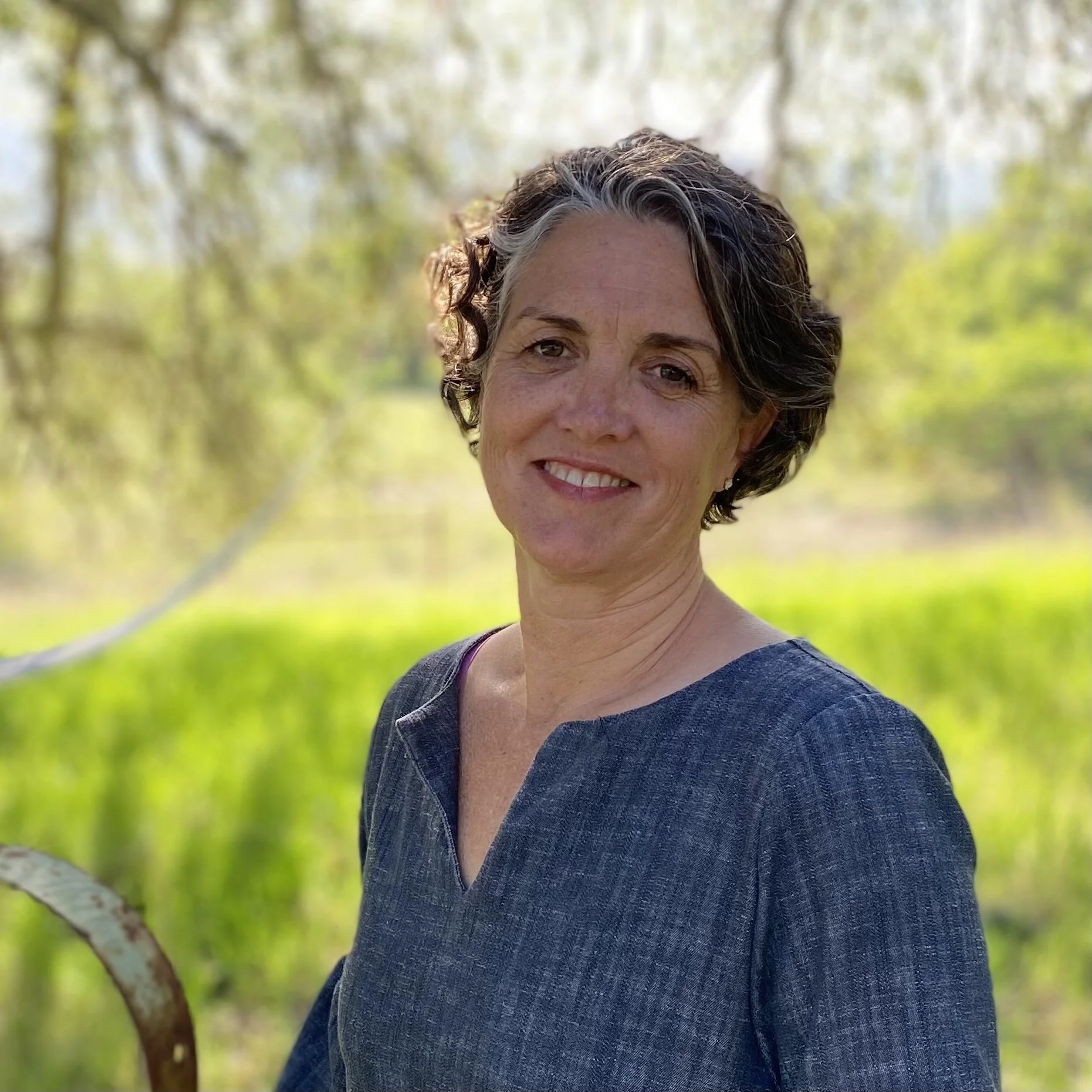
I’m a board-certified pediatrician who spent over 20 years leading physician wellness at The Permanente Medical Group/Kaiser Permanente — one of the largest physician groups in the country. I served as Site Chief of Pediatrics and Chief of Physician Wellness.
I didn’t study physician burnout from the outside. I led through it, built programs from the inside, and have coached hundreds of physician leaders navigating it.
Physician well being isn't a recent career change for me. I have been building effective physician wellness programs since 2002 — long before the current wave of excitement.
Depth of experience shapes every program I create.
I integrate professional coaching, nervous system science, psychology, mindfulness, and practical strategy. My programs engage even those physicians who are skeptical of “wellness,” short on time, and exhausted by performative solutions.
Since founding Pause & Presence in 2020, I’ve coached more than 1,000 physicians and physician leaders across the U.S. and Canada. I hold multiple coaching certifications and have advanced training in mindfulness and nervous system science. I’m a graduate of the University of California San Francisco Medical School and Dartmouth College.
“Jessie offered so many pearls that resonated and helped me understand how a lot of my thinking is defined by and a product of the medical training culture.”
-Oncology, Stanford University
Frequently Asked Questions
-
I offer three formats: keynote talks and workshops for conferences and events; immersive full-day wellness retreats for teams; and virtual coaching programs including cohort coaching, GME coaching for fellows and residents, sponsored 1:1 coaching, and leadership development series. Many institutions combine formats. A planning conversation is the best way to determine what fits.
-
If you need a speaker for a specific event or conference, start with a keynote or workshop. If you want a transformative shared experience that builds trust and connection within a team, a retreat is ideal. If you’re looking for sustained behavior change, skill building, or GME programming, a coaching series is the strongest fit. Many institutions combine a retreat or keynote with a follow-up coaching series for maximum impact. I help you figure this out in a planning call.
-
Yes. Coaching that lacks clinical credibility or proper training can leave physicians more cynical and less trusting — both of the program and of their institution. Peer coaching programs, while well-intentioned, can cause harm when facilitators don’t have advanced coaching training or don’t understand the specific psychological and physiological dynamics of physician burnout. A talk that misses the mark confirms physicians’ suspicion that leadership doesn’t get it. The quality of the facilitator and the design of the program determine whether wellness programming helps or makes things worse.
-
In our Sutter Health East Bay program, 100% of 79 participating physicians found the program helpful, 100% would recommend it, and 75% felt more hopeful. Published RCTs show that physician coaching reduces burnout, improves engagement, and increases professional fulfillment. Improved engagement correlates with better patient care, safety, retention, and reduced medical errors.
-
Costs varies by format and scope. Keynotes start at $7,500 plus travel. Retreats range from $10,000–$20,000 depending on group size. Coaching program pricing depends on format, number of sessions, and cohort size. Costs start at $12,000
Annual programs with coaching, retreats, and leadership training are $50,000-$100,000. Multi-year programming including training internal coaches $250,000-750,000.
The cost of not investing is also worth considering: replacing a single physician costs $500,000 to $1 million, and burnout-driven turnover, medical errors, patient experience declines, and malpractice exposure compound that cost across your entire organization.
-
A lot — and I can help you figure out the highest-impact use.
Here's a rough guide:
$7,500–$15,000 can fund a keynote talk or a half- to full-day workshop for a conference, grand rounds, or leadership retreat. This is a great starting point if you're introducing this work to your organization for the first time.
$16,000–$20,000 can fund a full-day immersive retreat for up to 24 physicians at Nicasio Creek Farm, including facilitation, farm-to-table meals, and all programming. This is the most concentrated, high-impact single-day investment.
$12,000–$30,000 can fund a virtual coaching cohort for a group of physicians.
You can sponsor 1:1 coaching individual physicians for $4000 each. This is great for leadership development, GME, or targeted support for physicians in high-demand roles.
$50,000–$100,000 can fund a comprehensive program combining retreats, virtual coaching, and leadership development. This kind of sustained investment creates culture-level change.
I'm happy to help you design a program that fits your budget. Every planning call starts with what you have and what you're trying to accomplish.
Where do institutions find funding for physician wellness programs?
You'd be surprised how many budget lines this work can draw from. I've helped institutions fund programs through:
Wellness or well-being budgets — the most obvious source, but often the smallest
CME funds — programs and retreats can be accredited for CME, making CME budgets a natural funding source
Philanthropy and foundation grants — many health system foundations have grants specifically for workforce well-being, professional development, or innovation in care delivery
Patient experience and quality improvement budgets — because physician wellness directly impacts patient satisfaction scores, care quality, and safety outcomes, these programs qualify for quality and patient experience funding
Retention and recruitment budgets — HR and medical staff offices often have funds earmarked for physician retention initiatives
GME and graduate medical education funding — GME programs have dedicated budgets for trainee well-being, especially in the context of ACGME requirements
Leadership development and professional development budgets — coaching programs fit naturally under leadership and professional development
Department or division discretionary funds — department chiefs sometimes have discretionary budgets for team development
As a former institutional wellness leader, I know how these budgets work from the inside. I regularly help teams identify creative funding strategies during our planning conversation. Several of the programs I've led were funded through combinations of two or three of these sources.
-
You'd be surprised how many budget lines this work can draw from. I've helped institutions fund programs through:
Wellness or well-being budgets — the most obvious source, but often the smallest.
Philanthropy and foundation grants — many health system foundations have grants specifically for workforce well-being, professional development, or innovation in care delivery
Patient experience and quality improvement budgets — because physician wellness directly impacts patient satisfaction scores, care quality, and safety outcomes, these programs qualify for quality and patient experience funding
Retention and recruitment budgets — HR and medical staff offices often have funds earmarked for physician retention initiatives
GME and graduate medical education funding — GME programs have dedicated budgets for trainee well-being, especially in the context of ACGME requirements
Leadership development and professional development budgets — coaching programs fit naturally under leadership and professional development
Department or division discretionary funds — department chiefs sometimes have discretionary budgets for team development
CME funds — programs and retreats can be accredited for CME, making CME budgets a natural funding source
As a former institutional wellness leader, I know how these budgets work from the inside. I regularly help teams identify creative funding strategies during our planning conversation. Several of the programs I've led were funded through combinations of two or three of these sources.
-
Yes. I design coaching programs specifically for GME populations, including fellows at Stanford Medicine. These programs help institutions meet ACGME well-being requirements.
-
Every engagement begins with a complimentary planning call. We discuss your team’s challenges, goals, culture, and logistics, and I recommend the format that will create the most impact.
-
Organizations continue to come back — Stanford since 2020, Sutter Health since 2022, Providence Health in 2024 and 2025, American College of Cardiology confirmed through 2028.
Physician Coaching Is One of the Highest-Impact Wellness Interventions
Coaching is one of the few wellness interventions with rigorous evidence behind it. It’s also one physicians highly value.
Multiple randomized controlled trials demonstrate that physician coaching improves well-being and reduces distress and burnout. Well-coached physicians report improved workplace engagement which correlates with better patient care, patient safety, higher satisfaction, reduced medical errors, and stronger retention.
Selected studies:
The first step is a planning call.
Because every institution and organization is different, I meet with you by Zoom or phone to understand your goals, team culture, and challenges. Then, I will recommend the format and scope that will create the most impact.